

IceRiver EU miners are built for long-term, continuous operation, but even the most reliable ASIC hardware can experience downtime if key operating factors are overlooked. Miner downtime is one of the most underestimated issues in crypto mining, as even short interruptions can quietly reduce profitability and extend ROI timelines
Why Miner Downtime Is So Costly
Every minute a miner is offline:
- Hashrate drops to zero
- Rewards are missed
- ROI timelines extend
Downtime doesn’t always show up as a dramatic failure. Often, it’s caused by small, preventable issues that compound over time.
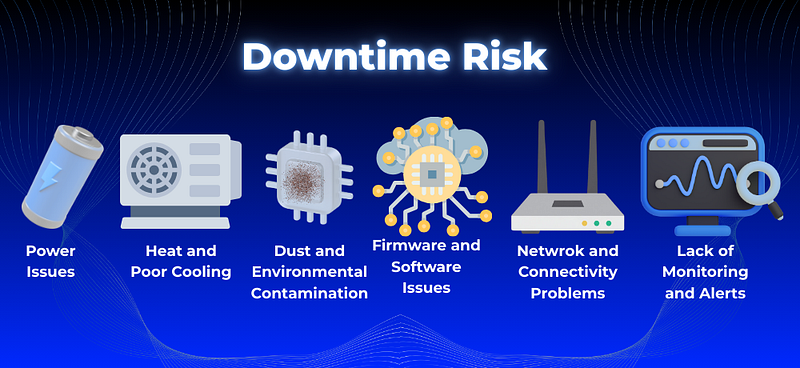
1. Power Issues
Common Power-Related Problems
- Power outages or unstable grid supply
- Inadequate electrical capacity
- Faulty power cables or connectors
- Voltage spikes or drops
ASIC miners require stable, continuous power. Even brief interruptions can cause reboots, configuration errors, or hardware stress.
How to Avoid It
- Use proper electrical infrastructure
- Avoid overloaded circuits
- Install surge protection
- Consider hosting environments with industrial-grade power
Stable power is the foundation of reliable mining.
2. Heat and Poor Cooling
Heat is one of the leading causes of miner downtime.
What Happens When Miners Overheat
- Automatic throttling
- Sudden shutdowns
- Reduced hashrate
- Long-term hardware degradation
ASIC miners are designed for high workloads, but they still need proper airflow and temperature control.
How to Avoid It
- Ensure unobstructed airflow
- Maintain proper room ventilation
- Clean fans and air intakes regularly
- Use temperature monitoring and alerts
Efficient cooling keeps miners online and extends hardware lifespan.
3. Dust and Environmental Contamination
Dust buildup is a silent killer in mining environments.
Why Dust Causes Problems
- Blocks airflow
- Traps heat
- Damages fans and connectors
- Increases failure risk over time
This is especially common in home mining or poorly filtered facilities.
How to Avoid It
- Clean miners regularly
- Use air filtration where possible
- Avoid placing miners near open windows or dusty areas
- Consider professional hosting with controlled environments
A clean environment dramatically reduces downtime risk.
4. Firmware and Software Issues
Outdated or unstable firmware can cause:
- Random reboots
- Connection loss to pools
- Hashrate instability
- Inaccurate monitoring data
Some miners avoid firmware updates entirely, which can also be risky.
How to Avoid It
- Keep firmware up to date from trusted sources
- Avoid experimental or unofficial builds
- Monitor release notes before updating
- Reboot miners during planned maintenance windows
Stable firmware equals stable performance.
5. Network and Connectivity Problems
Mining depends on constant communication with the pool.
Common Network Issues
- Internet outages
- Router or firewall misconfiguration
- DNS issues
- Packet loss or high latency
Even short disconnections can stop reward accumulation.
How to Avoid It
- Use reliable internet connections
- Set up failover or backup connections if possible
- Monitor miner connectivity status
- Avoid unnecessary network changes
Network stability is just as important as power stability.
6. Lack of Monitoring and Alerts
Many miners don’t realize their machines are offline until hours or days later.
Why This Is Dangerous
- Lost revenue goes unnoticed
- Problems escalate before being addressed
- ROI silently deteriorates
How to Avoid It
- Use monitoring dashboards
- Enable alerts for hashrate drops or offline status
- Review performance regularly
Proactive monitoring turns downtime into a manageable event instead of a surprise.
Home Mining vs Hosting: Downtime Risk Comparison
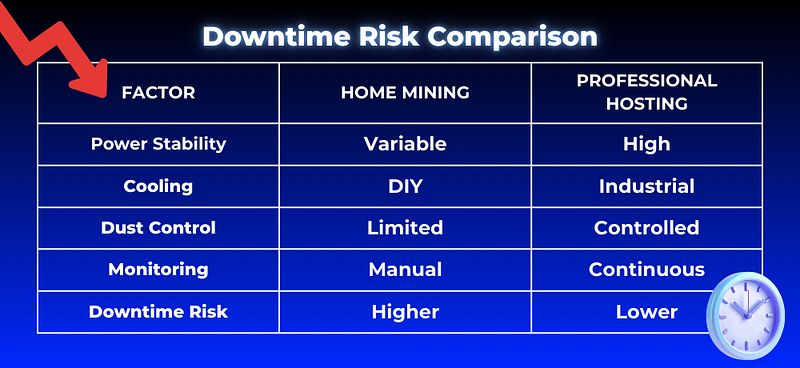
This is why many miners eventually move to hosting environments once they scale.
Conclusions
Miner downtime is rarely caused by one big failure. It’s usually the result of small, overlooked issues stacking up over time.
By managing:
- Power stability
- Cooling and airflow
- Clean environments
- Firmware updates
- Network reliability
- Active monitoring
miners can dramatically reduce downtime and protect long-term profitability.
Mining success isn’t just about hashrate — it’s about keeping that hashrate online.